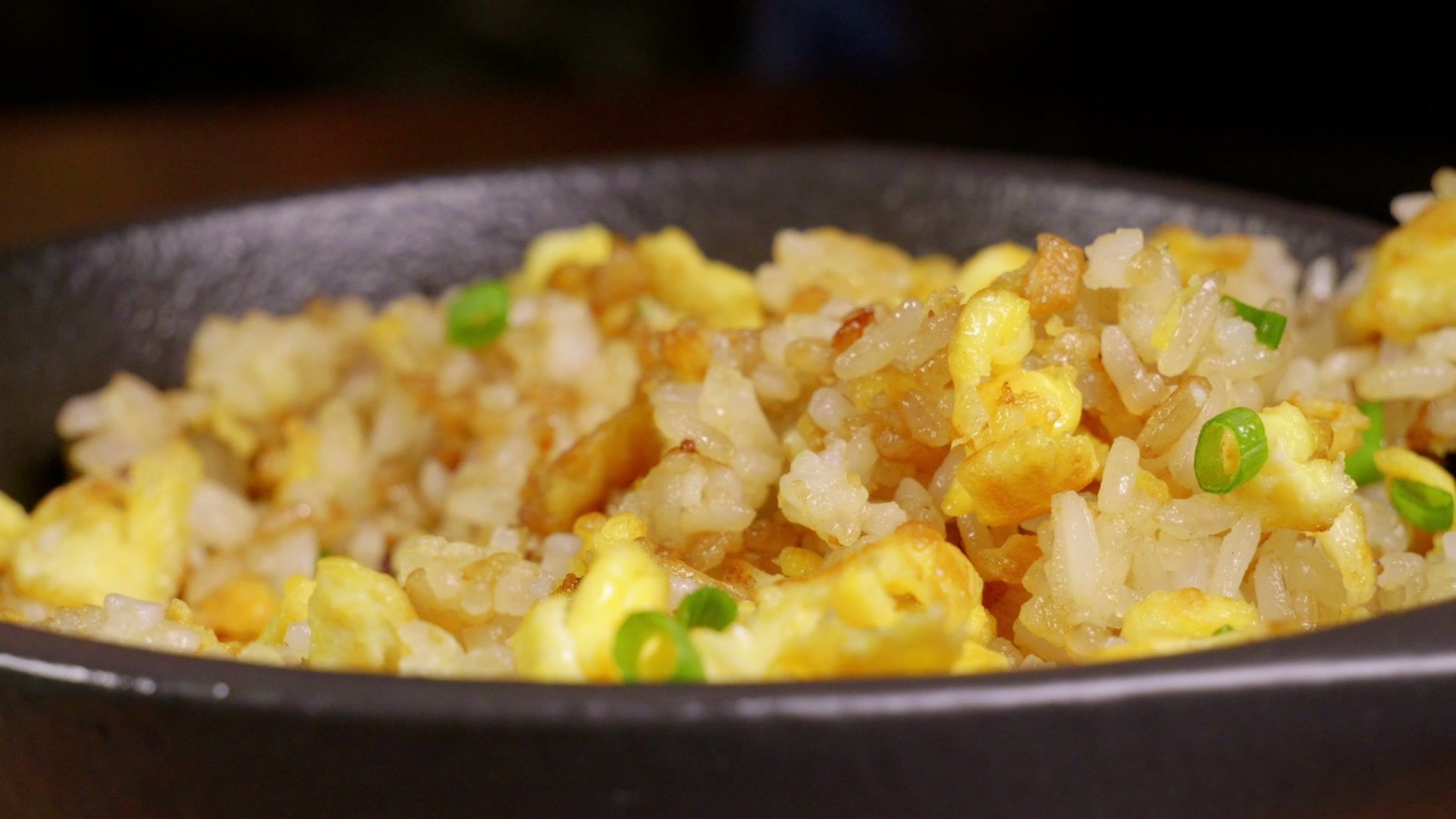
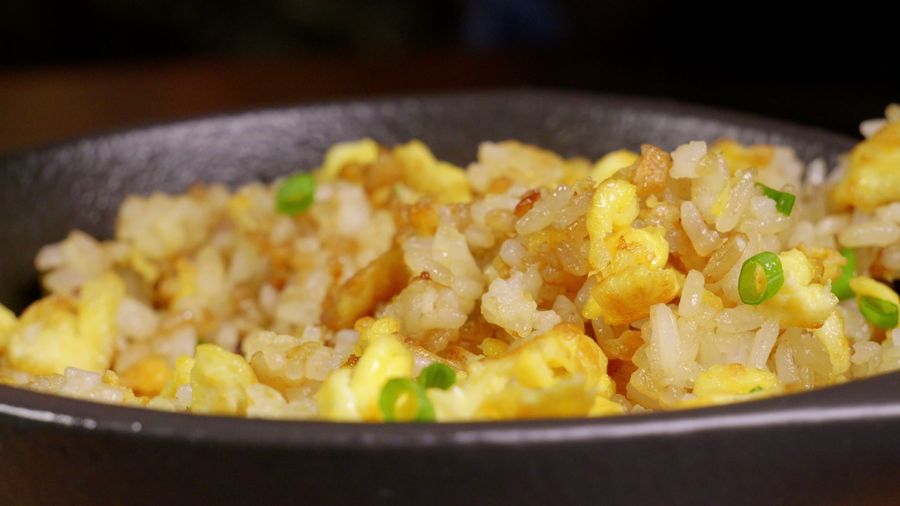
Restaurant-style egg fried rice is about removing water at every step: cook the rice with equal parts water (1 cup per 1 cup of rice), fluff it and let the steam out, drain the watery egg white through a sieve, fry the eggs first, then the rice in one thin layer on a blazing-hot pan, and run the soy sauce around the hot edge. When the rice starts to crackle, the last moisture is gone — it’s frying, not steaming. About 35 minutes with the rice, serves 2.
Instructions
- 1
Rinse the rice in a sieve under running water, stirring with a whisk, until the water runs clear.
- 2
Cook it with equal parts water — 1 cup of water per 1 cup of rice, less than the package says.
14:00 - 3
Don’t cover the cooked rice — fluff it with a fork and let the steam escape while you prep the rest.
- 4
Slice the green onions thin.
- 5
Crack the eggs into a sieve over a bowl and let the watery white drain off; beat with just a few strokes.
- 6
Heat the pan until a palm above it feels the heat push back, add the oil, and scramble the eggs into soft pieces; remove them before they brown.
- 7
Crank the heat higher and spread the rice in one thin layer, not a pile. Fry until it crackles — that sound is the last water leaving.
04:00 - 8
Run the soy sauce around the hot edge of the pan, let it sizzle a second, then stir it in.
- 9
Return the eggs, add the green onions and a few drops of toasted sesame oil, toss, and serve.
Watch the video
Notes from our kitchen
The rice timer in the video reads fourteen minutes because it runs start to finish — the actual simmer is about ten. No thermometer for the pan: hold a palm above it, and when the heat pushes back, it’s ready. Rinsing the rice is 70 % of the result, the 1:1 water ratio another 20, the cooking time the last 10.
Frequently Asked Questions
Do I really need day-old rice for fried rice?
No — that’s the most persistent fried-rice myth. What matters isn’t age, it’s dryness. Cook the rice with equal parts water (1:1, less than the package says), then fluff it and let the steam escape. Fresh-but-dry rice fries better than old-but-wet rice.
Why fry the eggs separately from the rice?
A restaurant burner holds its heat even with a full wok; a home burner doesn’t. Add everything at once and the pan cools, so the food steams instead of fries. Cooking in stages keeps the pan blazing — and the egg stays in soft pieces instead of coating the rice as a wet film.
What does the crackling sound mean?
It’s the last of the water leaving the rice. Spread the rice in one thin layer on a very hot pan and listen: when it starts to crackle, it’s frying, not stewing — that’s the exact moment the grains turn dry and separate.
Related Recipes
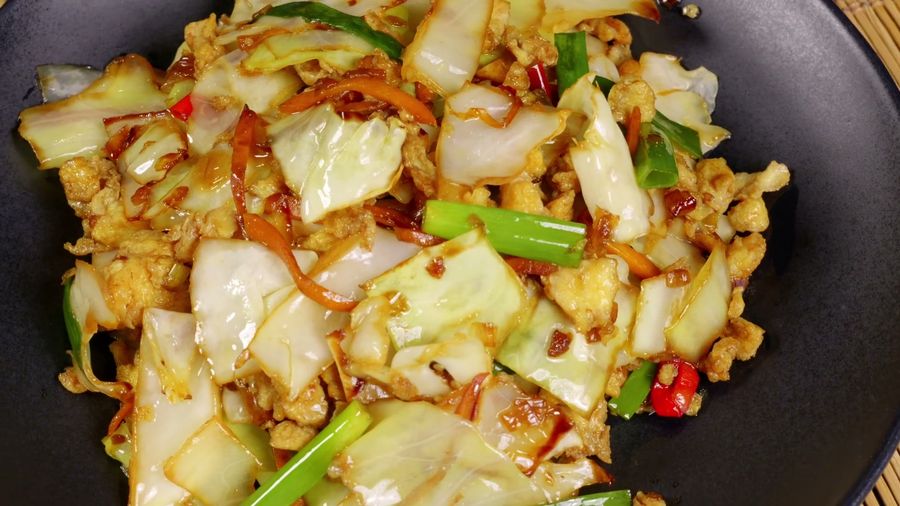
Chinese Cabbage & Eggs
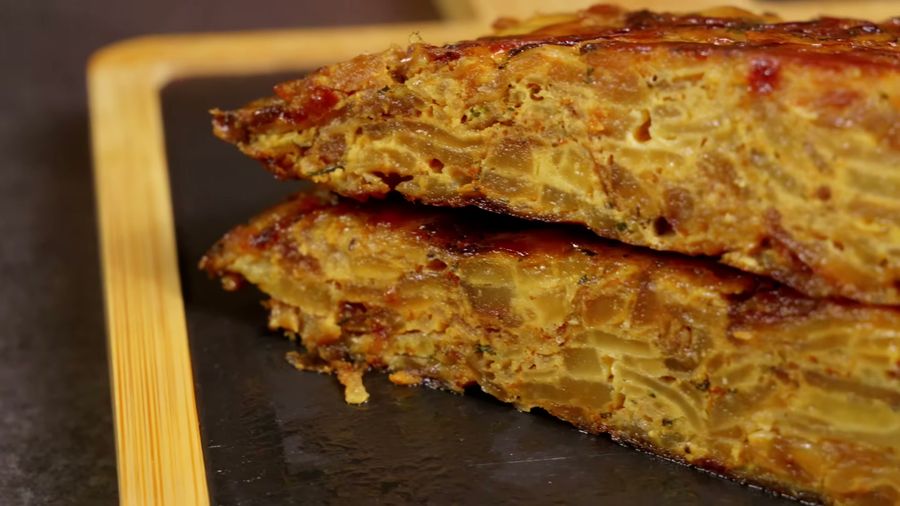
Tortilla de Patatas
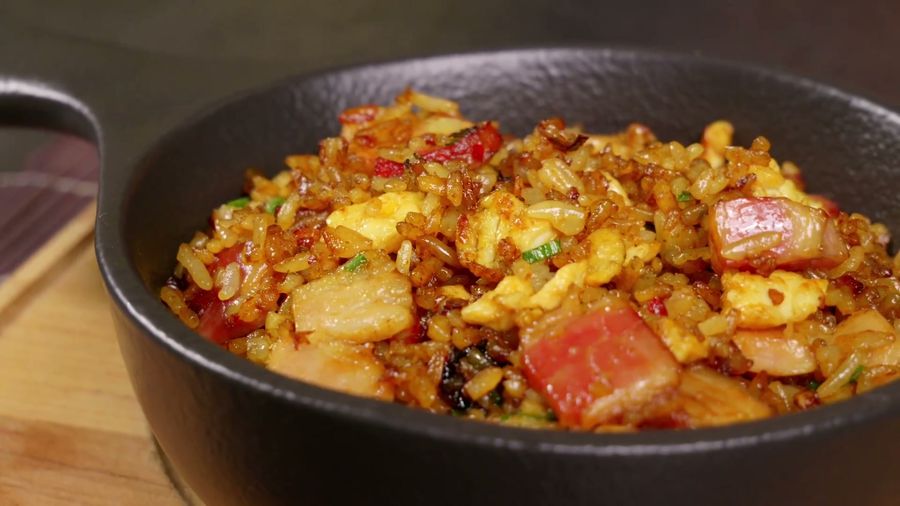
Golden Fried Rice with Pork Belly & Crispy Garlic Chips
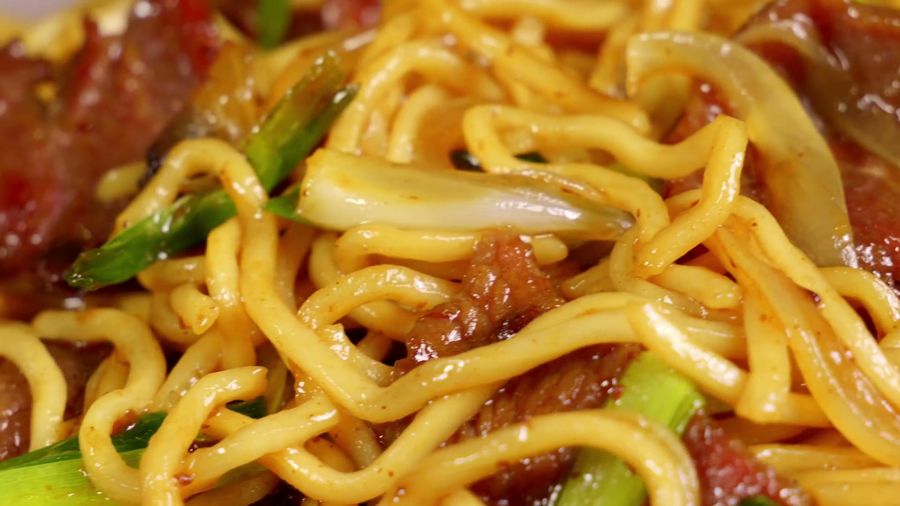
Beef & Onion Noodles

Pasta alla Norma