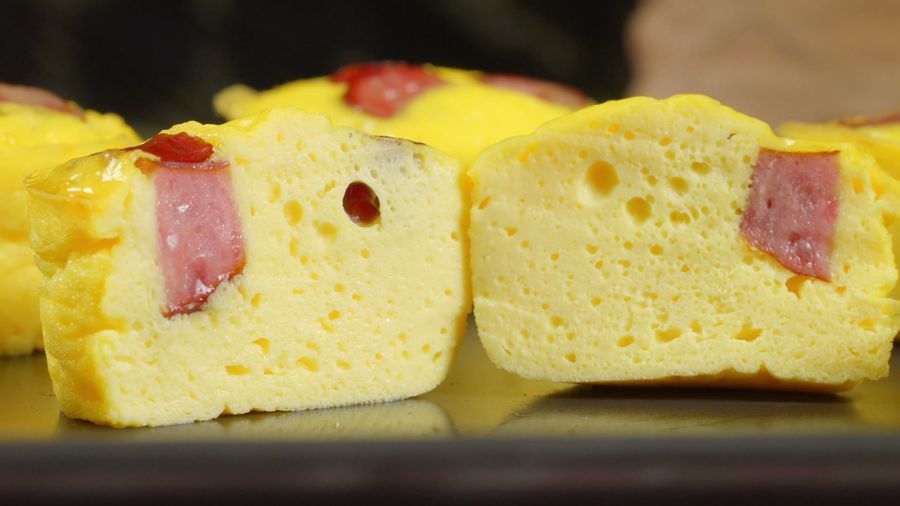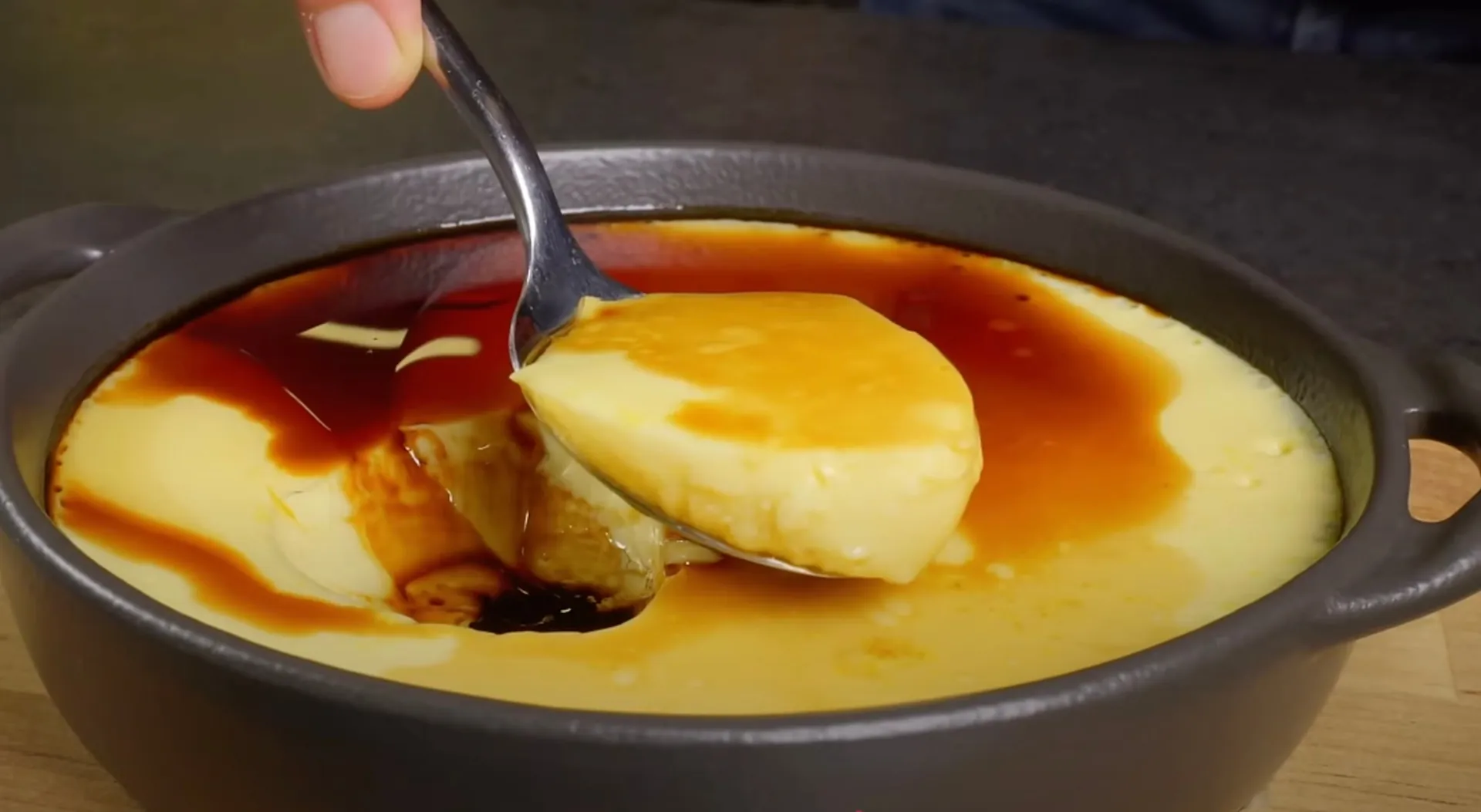
These savory Japanese steamed eggs set into a wobbly, spoonable custard because the eggs are diluted with exactly twice their weight in chicken broth. Weigh the cracked eggs first, then measure the broth, since that 2:1 ratio is what gives the custard its set. Straining the whisked mixture through a sieve removes air bubbles and gives a glassy surface. Eight minutes over low steam plus a 5-minute covered rest is all the cooking they need. You know they are done when the center jiggles as one piece rather than sloshing. Finish with sesame oil, soy sauce, and scallions.
Instructions
- 1
Crack 3 eggs into a bowl, add a pinch of salt. Weigh the eggs, then measure out twice their weight in chicken broth (about 360 ml). Keeping the 2:1 ratio is what gives the custard its set.
- 2
Whisk until completely smooth.
- 3
Set up a steam bath: pour about 2 cm (1 in) of water into a skillet and shape a ring from aluminum foil to stand in it as a support.
- 4
Rest a plate on the foil ring and pour the egg mixture through a sieve onto the plate — straining keeps it silky.
- 5
Cover the plate with a lid, then cover the skillet with another lid. Steam over low heat for 8 minutes.
08:00 - 6
Turn off the heat and let it sit, covered, for 5 more minutes.
05:00 - 7
Lift the plate out — the eggs should be set and jiggly. Drizzle with sesame oil and soy sauce, scatter scallions, and serve.
Watch the video
Notes from our kitchen
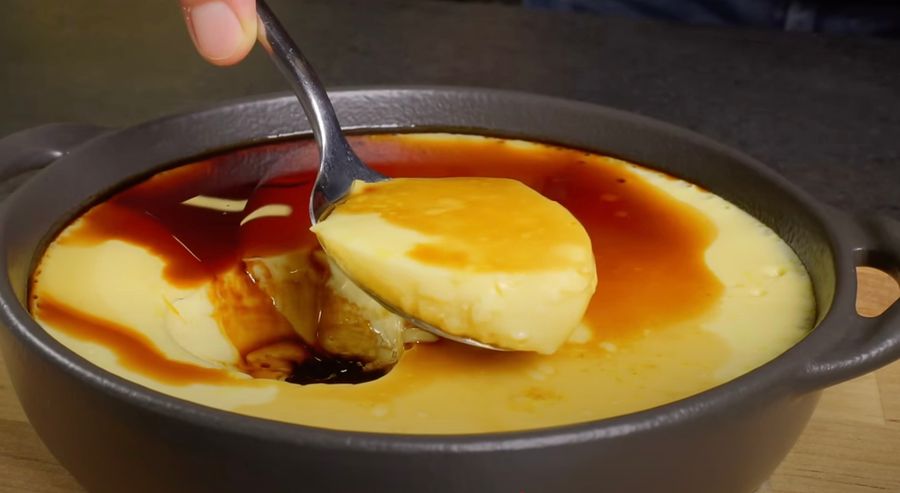
We steam these on a plate balanced over a foil ring in a skillet, so no special steamer is needed. The step we never skip is weighing the eggs and matching them with twice their weight in broth, about 360 ml for 3 eggs. That 2:1 ratio is the whole recipe; eyeballing it is how the custard ends up either loose or bouncy.
Our doneness cue is the jiggle test: lift the lid after the 5-minute rest and nudge the plate. The surface should tremble like set gelatin, not ripple like liquid. Rushing with higher heat is the classic mistake here. The custard boils inside and you get a pitted, spongy texture instead of a smooth one.
Variations
- Dashi instead of chicken broth. Swap in light dashi for the chicken broth to make the classic Japanese version. Keep the same 2:1 liquid-to-egg ratio and season sparingly, since dashi already carries plenty of savoriness.
- Vegetarian version. A mild vegetable broth works well in place of chicken broth. Avoid dark, heavily roasted stocks, which can turn the pale custard muddy and overpower the sesame oil finish.
- Individual cups. Divide the strained mixture between small heatproof cups or ramekins instead of one plate. Cover each with foil and steam the same way, checking a minute or two early since smaller portions set faster.
- Add-ins under the custard. A few cooked shrimp, shredded chicken, or sliced mushrooms dropped into the dish before pouring the egg mixture works well. Keep pieces small so the custard still sets evenly around them.
Frequently Asked Questions
Why strain the egg mixture?
Straining removes the chalazae and air bubbles, giving the steamed egg its glassy, custard-smooth surface.
Can I use water instead of chicken broth?
You can, but the broth is what carries the savory flavor. Use a light dashi or vegetable broth as an alternative, keeping the 2:1 liquid-to-egg ratio.
Why did my steamed egg turn out with holes?
The heat was too high. Keep it on low and don’t skip the 5-minute rest off the heat — a gentle, even temperature is what keeps the custard smooth.
Related Recipes

Egg-Filled Cheese Cones

Tamago Sando Breakfast Buns

Air Fryer Cottage Cheese & Egg Tortilla Cups

Corn Melt Wraps
Tender Chinese Beef Stir-Fry