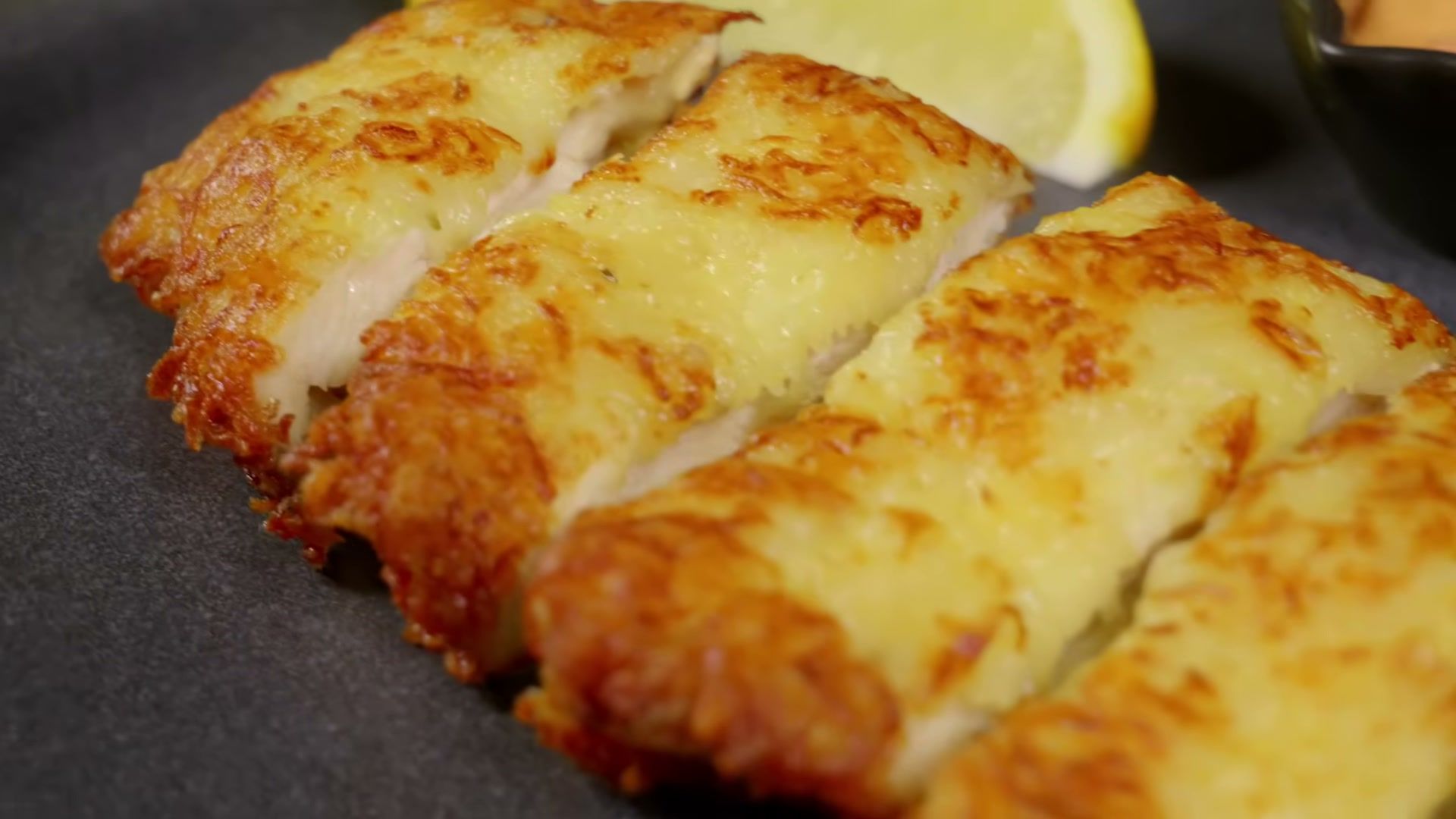
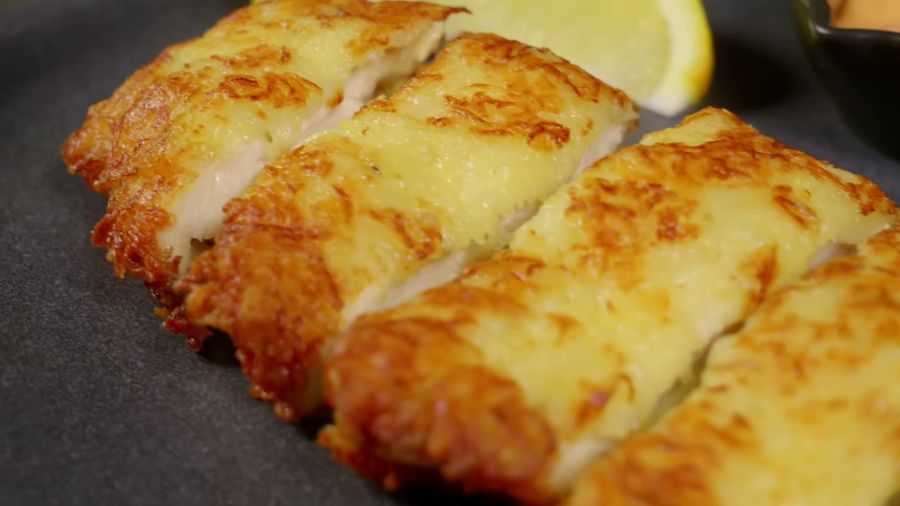
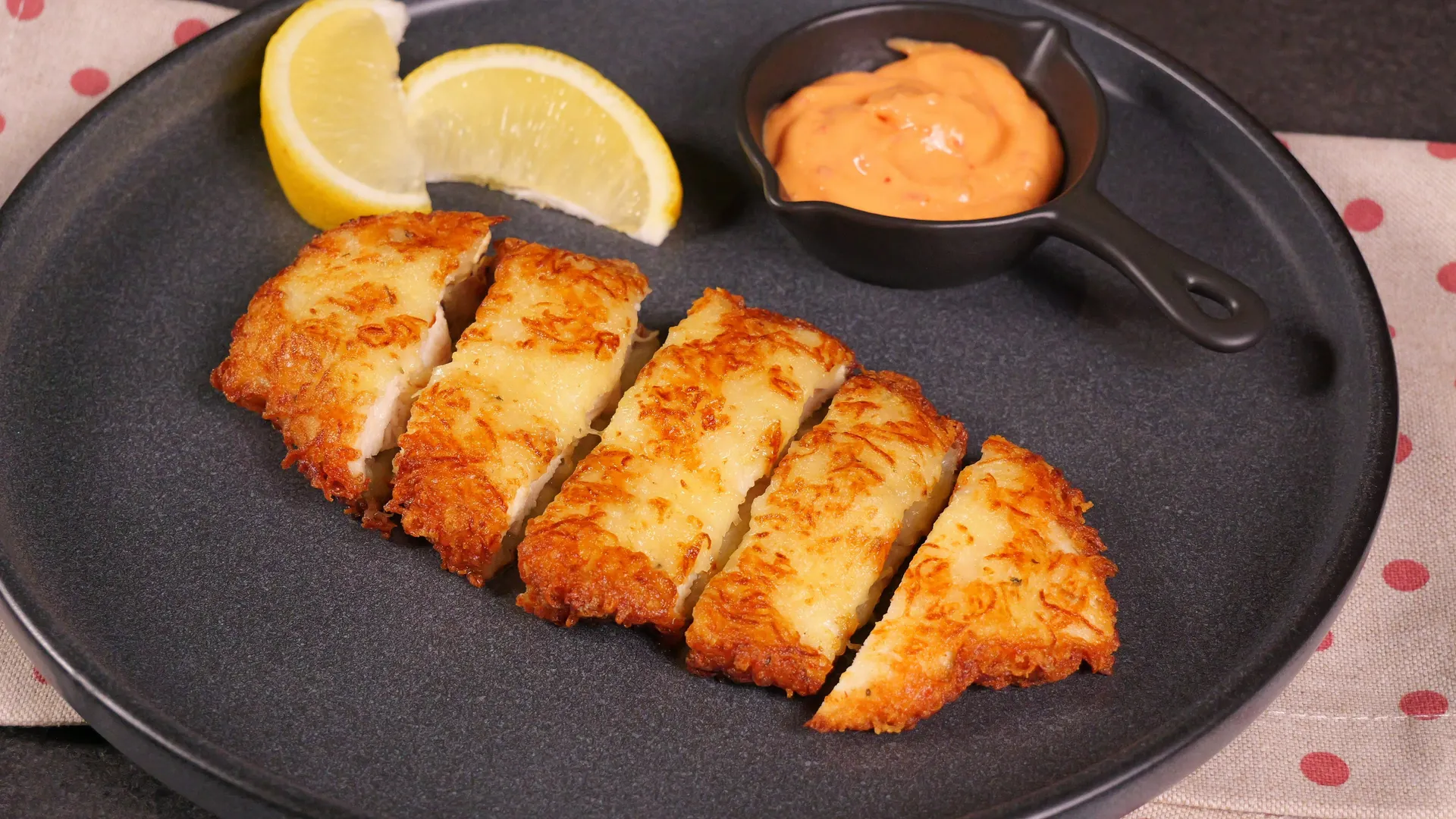
Hash brown chicken schnitzel swaps breadcrumbs for a crispy potato crust: grate and rinse 3 potatoes, squeeze them bone-dry, mix with grated Parmesan, dip thin chicken fillets in a light cornstarch-flour batter, press the potato mix on and shallow-fry 3–4 minutes per side until deep golden. Juicy inside, crackling potato crust outside — about 30 minutes, serves 2.
Instructions
- 1
Peel the potatoes and grate them finely — thin strands, not thick pieces; the little edges are what crisp.
- 2
Rinse the strands in cold water to wash off the starch and leave them to soak while you work.
- 3
Whisk the cornstarch, flour, garlic powder, herbs, salt and baking powder; add the water and mix into a smooth, loose batter — keep it thin.
- 4
Slice the chicken breast into thin fillets so the coating and the center cook at the same pace.
- 5
Squeeze the potato as dry as you can, finishing with a paper towel — wet potato won’t fry and slides off the chicken.
- 6
Mix the squeezed potato with the Parmesan.
- 7
Heat a shallow layer of oil in a pan — steady frying, not deep-frying.
- 8
Dip each fillet in the batter, then press the potato-Parmesan mix on firmly, especially around the edges.
- 9
Fry until both sides are deeply golden and the chicken is cooked through — 3–4 minutes per side.
04:00 - 10
Rest a minute before slicing so the juices stay put; serve with lemon.
Watch the video
Notes from our kitchen
The batter stays deliberately thin — a heavy batter would hide the potato, and the potato is the whole trick. Don’t skip the one-minute rest after frying: the crust settles and the juices stay in the chicken instead of on the cutting board. The tablespoon of salt seasons the whole crust, not one bite — most of it fries into the coating.
Frequently Asked Questions
Why won’t my potato crust stick to the chicken?
Two usual causes: the potato was still wet (squeeze it hard, then press with a paper towel — wet strands slide right off), or the batter layer was skipped. The batter is the glue; press the potato mix on firmly, especially around the edges.
Why rinse the potatoes and then squeeze them dry?
The cold-water rinse washes off surface starch so the strands don’t turn gluey, and the squeeze removes the water so they fry instead of steaming. Both steps exist to let every thin strand crisp separately — that’s the hash-brown texture.
What does the baking powder do in the batter?
It releases tiny bubbles as the batter hits the hot oil, so the glue layer fries light and crisp instead of setting into a dense shell. With cornstarch alongside the flour, the coating shatters rather than chews.
Can I air-fry it instead of shallow-frying?
You can — spray the crust generously with oil and cook at 200 °C, flipping once, until deep golden. The potato browns less evenly than in a pan, so expect a slightly patchier crust; the pan’s shallow oil layer is what makes every strand golden.
Related Recipes
Juicy Japanese-Style Chicken Breast
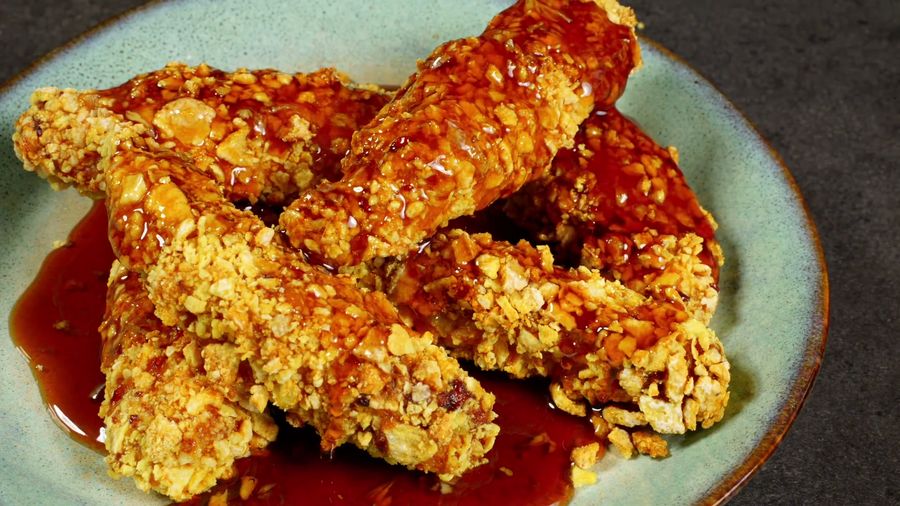
Hot Honey Chicken Tenders
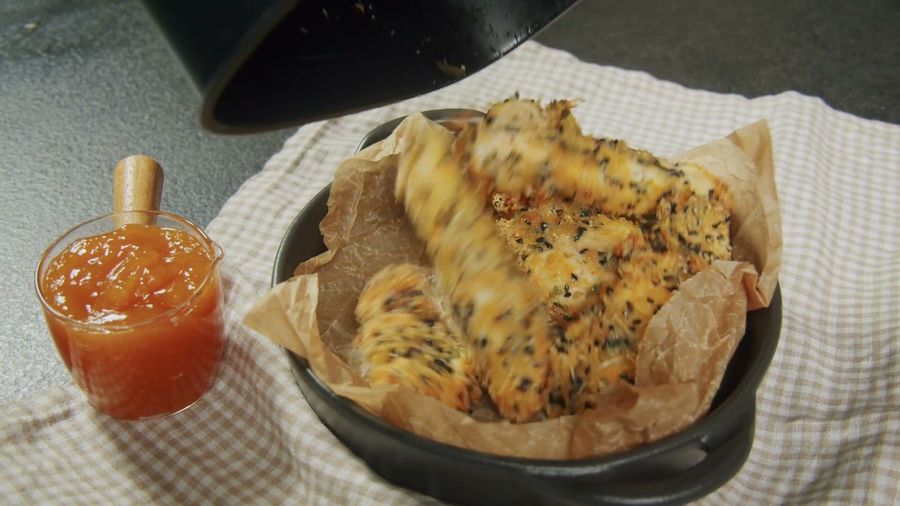
Super Crispy Chicken Tenders
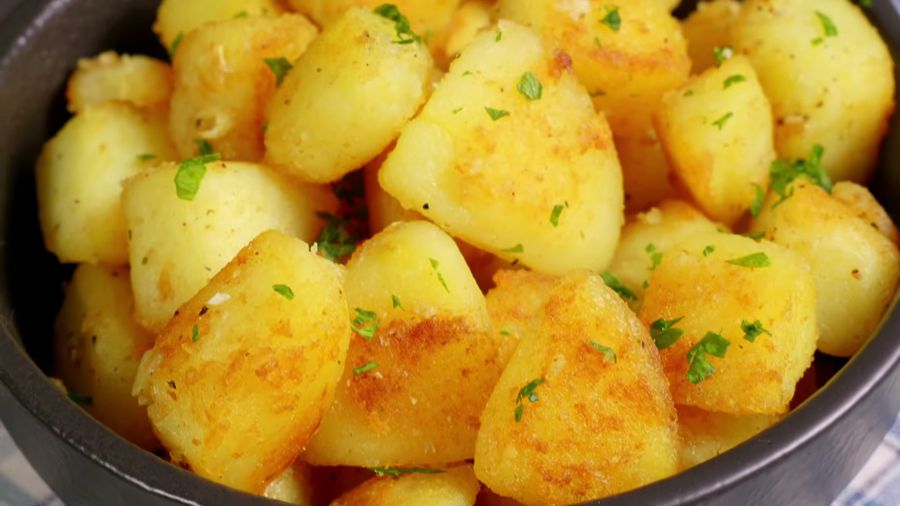
Golden Garlic Butter Potatoes
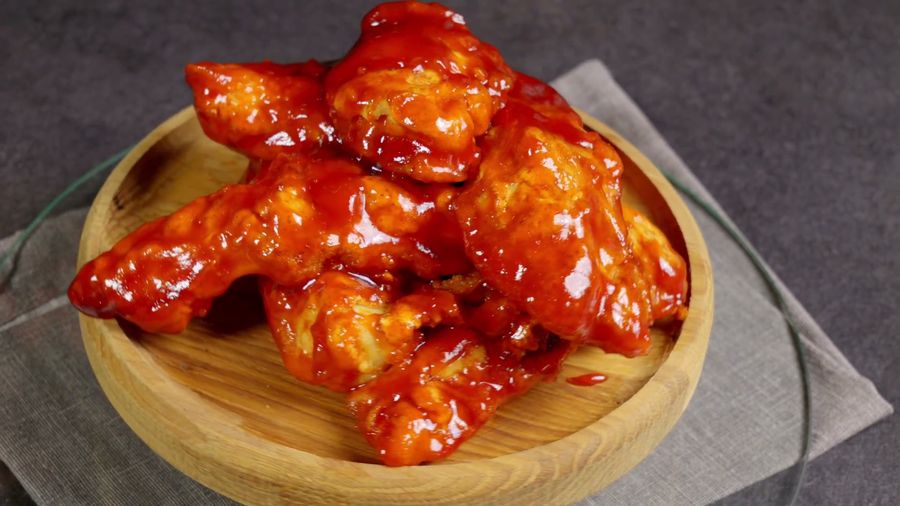
Honey BBQ Chicken Tenders