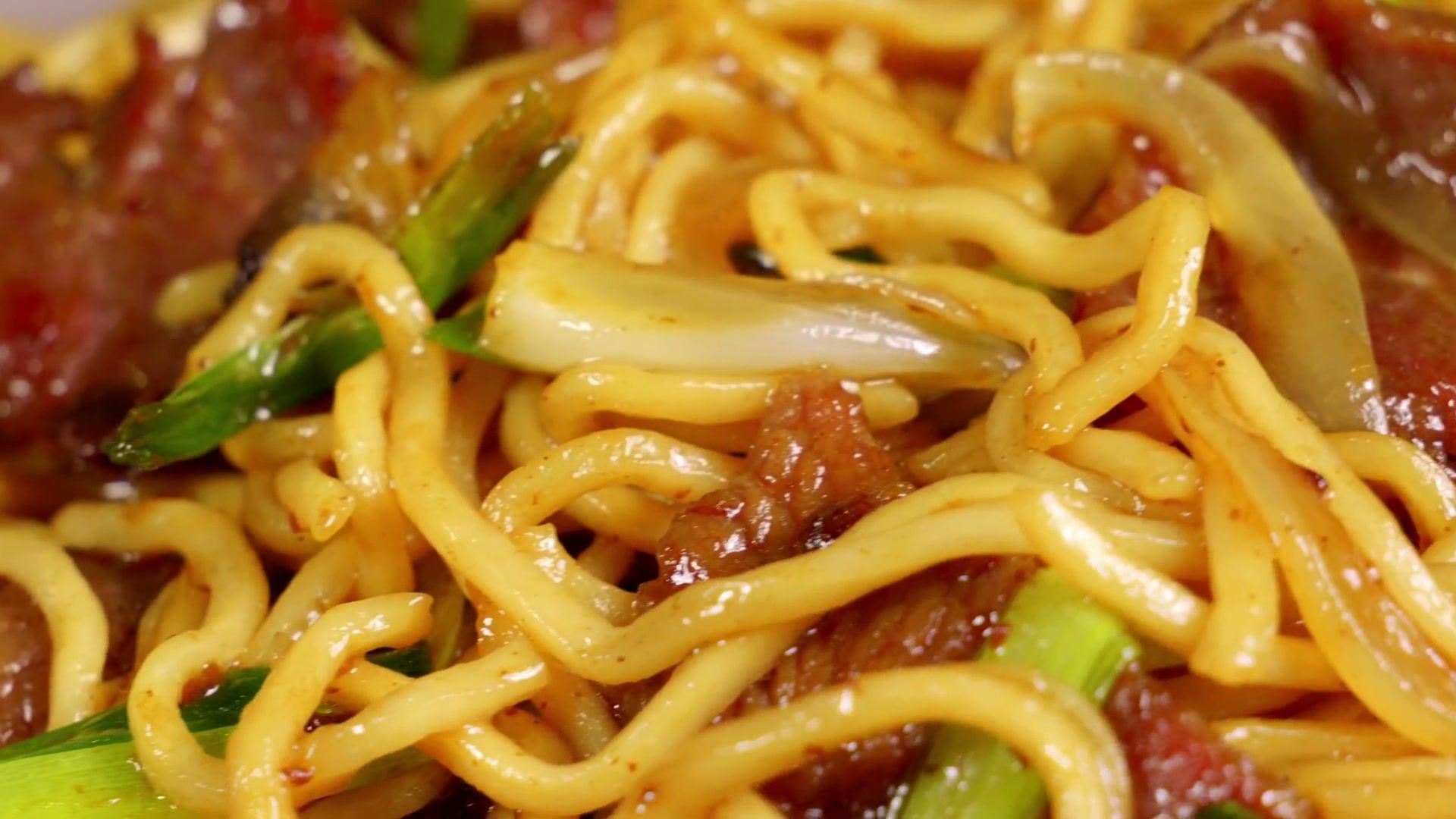
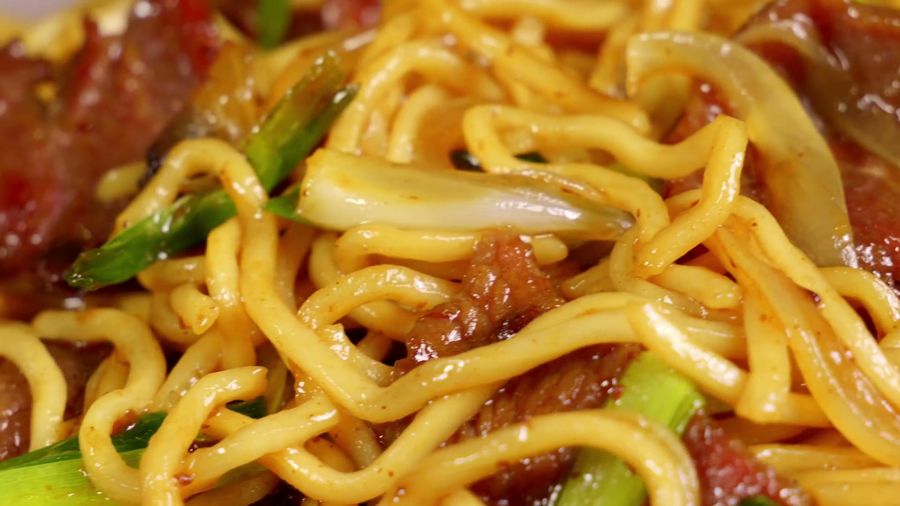
Beef and onion noodles deliver the takeout secret in 10 minutes of cooking: the beef — any cut, even cheap — is sliced a centimeter thick and tenderized with half a teaspoon of baking soda in 80 ml of water for 15 minutes, rinsed, then marinated in mirin, soy and unagi sauce with a light cornstarch coat that seals the juices in. It sears fast in a screaming pan while two noodle cakes boil beside it, onion half-moons and green onion lengths keep some bite, and a tablespoon of oyster sauce plus two of dark soy glaze every strand. Chopsticks alone pull the beef apart. Serves 2.
Instructions
- 1
Slice the beef about 1 cm thick — thin enough to cook fast, thick enough to stay juicy.
- 2
Mix in the baking soda and water, working it through every slice. Press cling film onto the surface and rest 15 minutes.
15:00 - 3
Rinse the beef thoroughly and shake it dry — soda residue tastes alkaline, and drier beef sears better. The tenderizing stays.
- 4
Build the marinade on the beef: mirin, soy sauce and unagi sauce.
- 5
Add the cornstarch and salt, and mix until every slice is glossy with a thin, even coat — it seals the juices in.
- 6
Cut the green onions into 3 cm pieces and the onion into half-moons — both should keep some bite.
- 7
Heat a thin layer of neutral oil; beside it, bring a pot of water to a boil for the noodles.
- 8
The beef should sizzle the moment it lands. Stir briskly so every slice gets hot-surface contact and the marinade turns to a glossy coating.
- 9
When the water boils, drop in the two noodle cakes and keep them springy.
- 10
Once the beef has color, add the white onion, then the green onion, and keep everything moving — stop before the onions lose their shape.
- 11
Drain the noodles and add them straight to the beef and onions.
- 12
Finish with the oyster sauce and dark soy — one brings rounded savory depth, the other the deep color. Toss until every strand is coated.
Watch the video
Notes from our kitchen
Half a teaspoon of soda is calibrated, not casual — it raises the surface pH so the proteins can’t knot up when the heat hits, and the effect survives the rinse. But the rinse itself is non-negotiable: leftover soda tastes faintly of soap. The pan must stay loud — the sizzle on landing is the sign it’s hot enough to sear instead of stew. And stop the onions while their edges have only softened; the little bite they keep is what makes the finished noodles interesting.
Variations
- Sauce substitutions. Unagi sauce is the one people don’t keep around — teriyaki with a pinch of sugar lands closest, or simply lean harder on the oyster sauce. The dark soy is harder to fake: it’s there for color; regular soy will taste right but leave the noodles pale.
- Noodle choice. The video uses two instant-style cakes because they cook in the beef’s timeline and grab sauce well. Fresh wheat noodles or udon work — just undercook them slightly, since they finish in the pan.
Frequently Asked Questions
How does baking soda make beef tender?
It raises the pH on the surface of the meat, which changes the charge of the muscle proteins — when the heat hits, they can’t bind tightly, so the beef holds its moisture instead of squeezing it out. That’s why even a cheap cut comes out soft enough to pull apart with chopsticks. Half a teaspoon per 300 g is plenty.
Do I really have to rinse the beef?
Yes — thoroughly. The tenderizing effect stays with the meat after rinsing, but any soda left on the surface tastes alkaline, faintly of soap. Rinse, then shake the slices as dry as you can: drier beef sears much better in the hot pan.
Is it really one pan?
The stir-fry is — beef, onions, sauces and noodles all finish together in the single pan. The noodles do boil in a pot alongside, by design: everything runs at once, which is how the whole dinner lands in about 10 minutes of cooking. Call it one pan and one honest pot of water.
How do I store and reheat leftovers?
Airtight in the fridge up to 2 days. Reheat in a hot pan with a splash of water to loosen the glaze — the cornstarch re-thickens as it warms. The beef stays tender on reheating; that’s the soda still doing its job. A microwave works but softens the onions past their bite.
Related Recipes
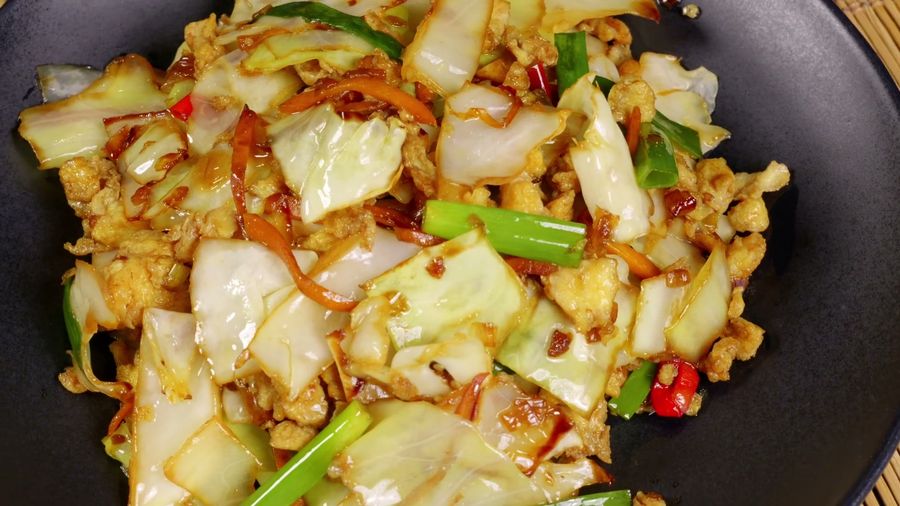
Chinese Cabbage & Eggs
Egg Fried Rice
Creamy Caramelized Onion Noodles
Garlic Beef Noodles
Beef and Onion Stir-Fry