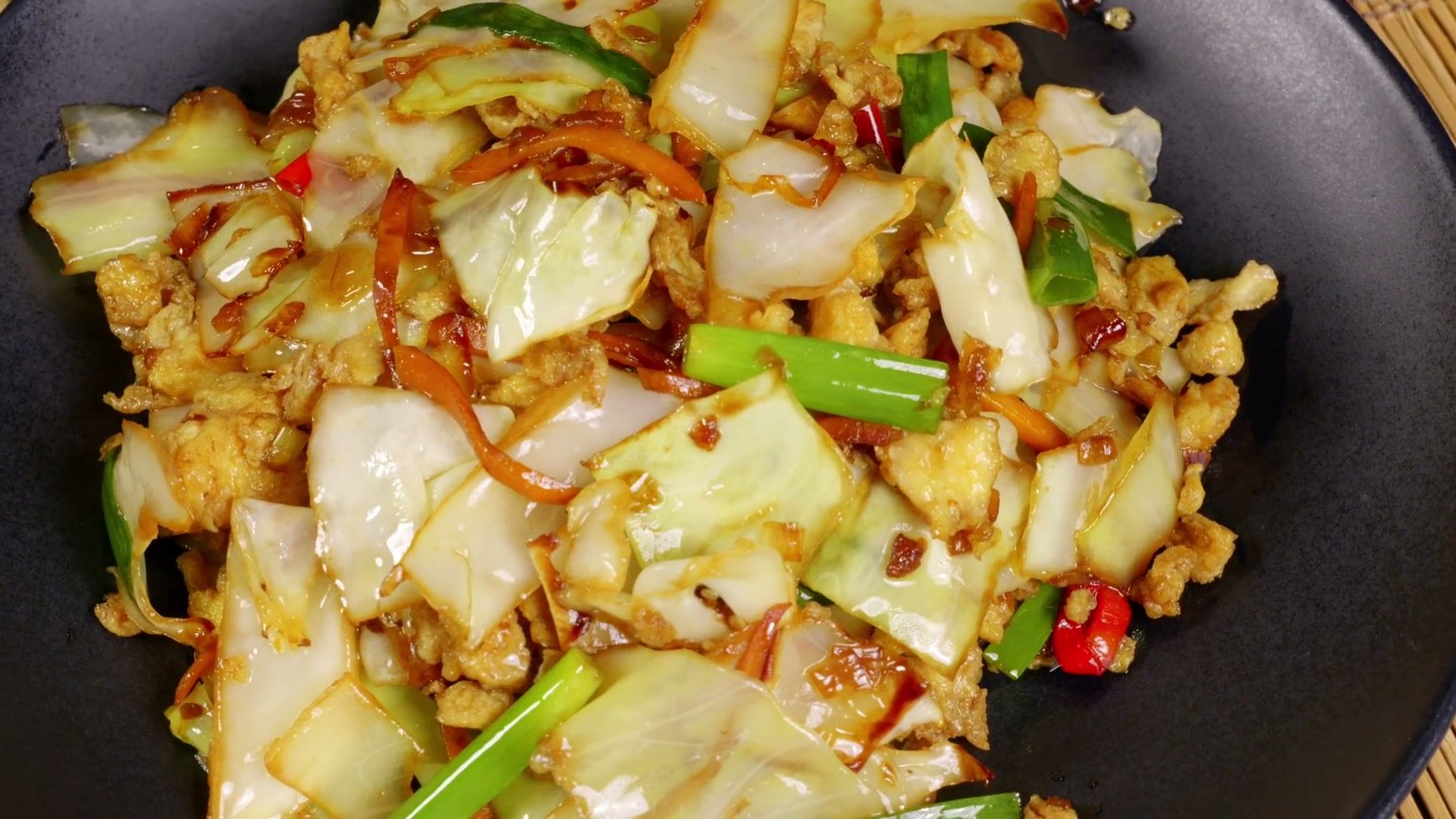
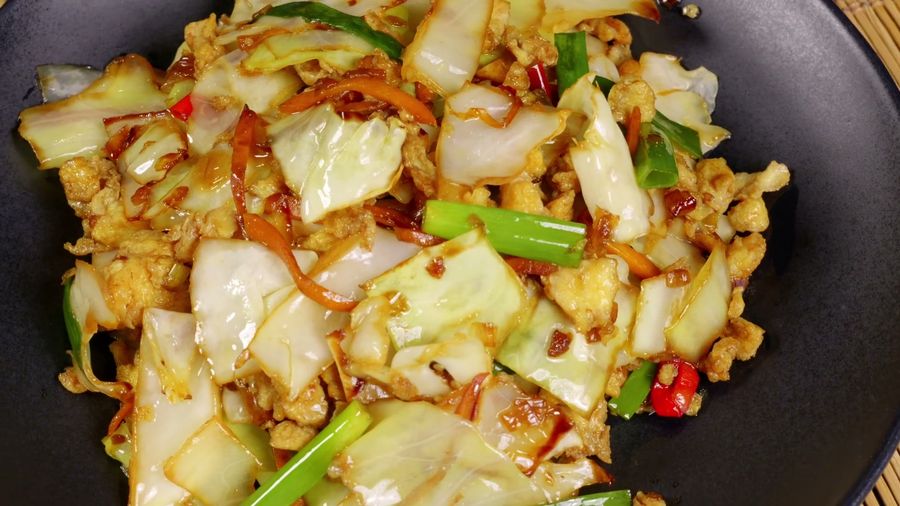
Chinese cabbage and eggs is plain green cabbage cooked the Chinese way: half a head torn by hand into bite-size pieces, with the thick ribs cut smaller and cooked first so they soften while the leaves keep a little spring. The eggs are the other trick — three of them, beaten with half a teaspoon of salt, scrambled soft in the hot wok and taken out at once, so the cabbage gets its time without the eggs turning rubbery. Onion, garlic, scallion whites and a red chili go in for the aroma, thin carrot strips follow, then ribs, then leaves; the eggs return at the end with the scallion greens, three tablespoons of soy sauce and a tablespoon of unagi — the sweet Japanese glaze that is the twist. Off the heat right away. Serves 3.
Instructions
- 1
Cut the hard core out of the half cabbage, halve it again and separate the leaves into a bowl, leaving them large for now.
- 2
Swish the leaves in a bowl of clean water — separating them lets the water reach both sides — then rinse under running water in a colander.
- 3
Pat the leaves dry, blotting between the folds. Wet leaves steam instead of frying — think of wet mushrooms in a pan.
- 4
Beat the eggs with the salt until whites and yolks blend — a fork is enough.
- 5
Prep the aromatics into small bowls: carrot in thin strips, onion and garlic finely chopped, chili sliced, scallion whites chopped and greens cut 3 cm long, kept apart.
- 6
Tear the leaves into bite-size pieces of similar size — ragged edges are fine. Cut the firm ribs smaller and keep them in their own pile.
- 7
Heat the wok, add a thin layer of oil and scramble the eggs soft, folding gently. The moment the last liquid egg sets, take them out.
- 8
Heat the wok again. Add the onion, garlic, scallion whites and chili; keep them moving until fragrant.
- 9
Add the carrot strips and fry briefly to take the raw edge off.
- 10
Add the cabbage ribs first. Start checking after about a minute — you want the first signs of softening with bite still left.
01:00 - 11
Add the tender leaves and turn them through; they need much less time. Stop at softened leaves with a little spring.
- 12
Return the eggs, add the scallion greens, and finish with the soy sauce and unagi. One final toss, then off the heat right away.
Watch the video
Notes from our kitchen
Drying the cabbage is the step everyone skips and the one the wok punishes hardest: water between the folds turns a stir-fry into a braise, and the leaves come out limp instead of springy. Cooking the eggs separately is what lets you give the cabbage real heat — soft-scrambled, pulled at once and returned at the end, they stay tender no matter how long the ribs need. And the two cabbage piles are not fussiness: the ribs are much firmer than the torn leaves, and a minute’s head start is the whole difference between tough ribs and mushy leaves.
Variations
- Without unagi sauce. The unagi is a sweet soy glaze, so the honest substitute is a teaspoon of honey or sugar stirred into the soy — or a splash of teriyaki. It is the video’s own twist on a Chinese stir-fry, so leaving it out and using soy alone is closer to the original dish, just less glossy.
- Heat level. One red chili is a choice, not a rule — the narration says so. Slice half for a mild dinner, seed it to keep the flavor without the burn, or add a second one with the whites of the scallions if the table likes it hot.
Frequently Asked Questions
Why cook the eggs separately?
Because cabbage and eggs want opposite things from the wok: the ribs need real heat and time, the eggs set in seconds. Scrambling the eggs first, pulling them the moment they set, and returning them at the very end gives the cabbage its cooking time while the eggs stay soft. It is the answer to how you soften cabbage without overcooking the eggs.
Why separate the ribs from the leaves?
The firm strips down the middle of each leaf are much denser than the torn leaf. Cut smaller and given the wok about a minute before the leaves go in, they soften to the same point at the same moment; cooked together, you get either tough ribs or leaves gone limp.
Does the cabbage really need to be dried?
Yes — draining is not enough. Water hiding between the folds boils off in the wok, and the pan spends its heat steaming the cabbage instead of frying it. Pat the leaves dry and blot the folds; the difference is springy leaves with a little char versus a wet, limp pile.
How do I store and reheat leftovers?
Airtight in the fridge for 2 days. Reheat briefly in a hot pan rather than the microwave, which softens the cabbage further and toughens the eggs — 1–2 minutes tossed over high heat brings the bite back. It is also good cold, spring-roll-filling style.
Related Recipes
Egg Fried Rice
Beef & Onion Noodles
Beef and Onion Stir-Fry
Tortilla de Patatas

Cabbage with Eggs Casserole in Air Fryer