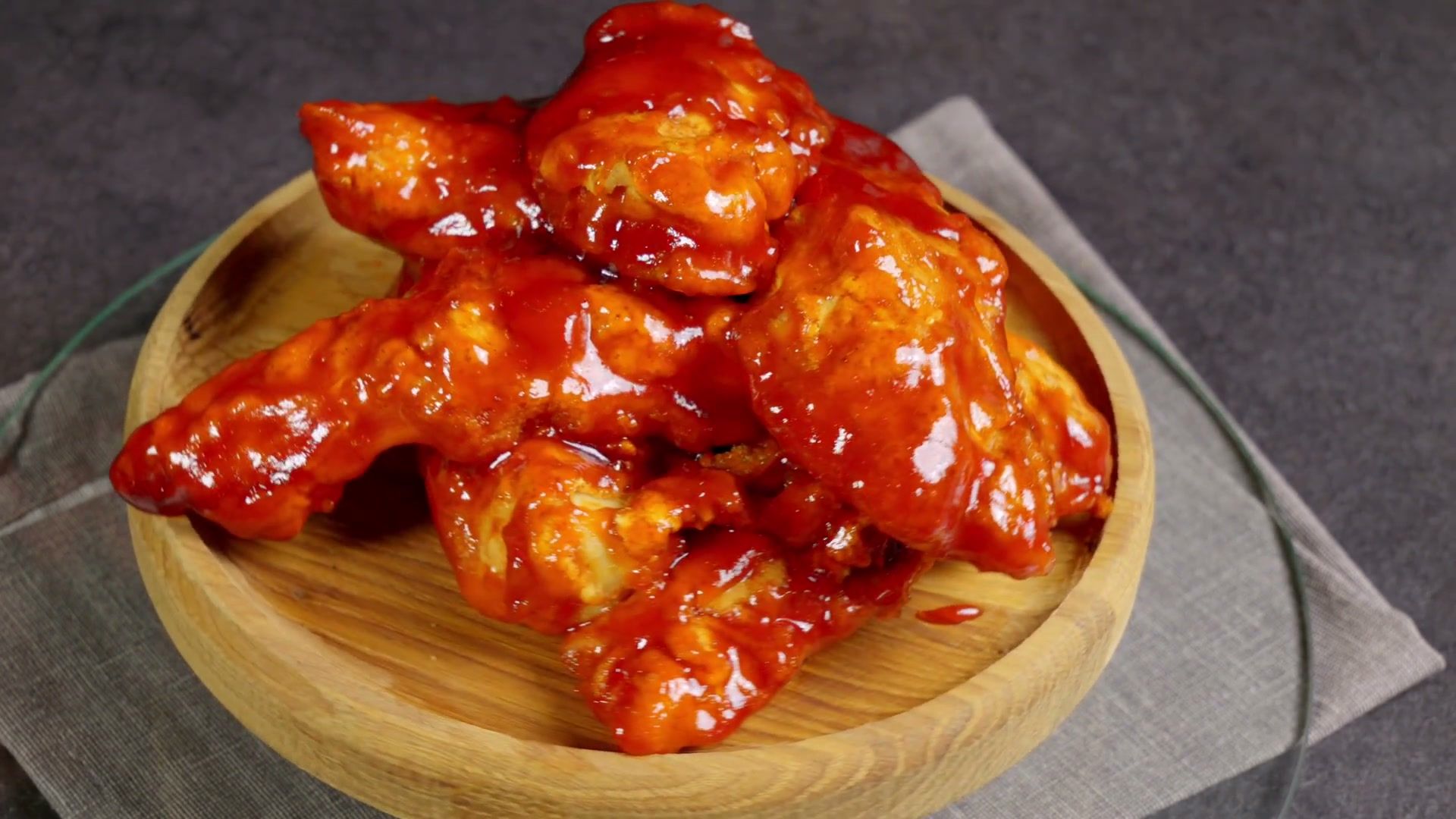
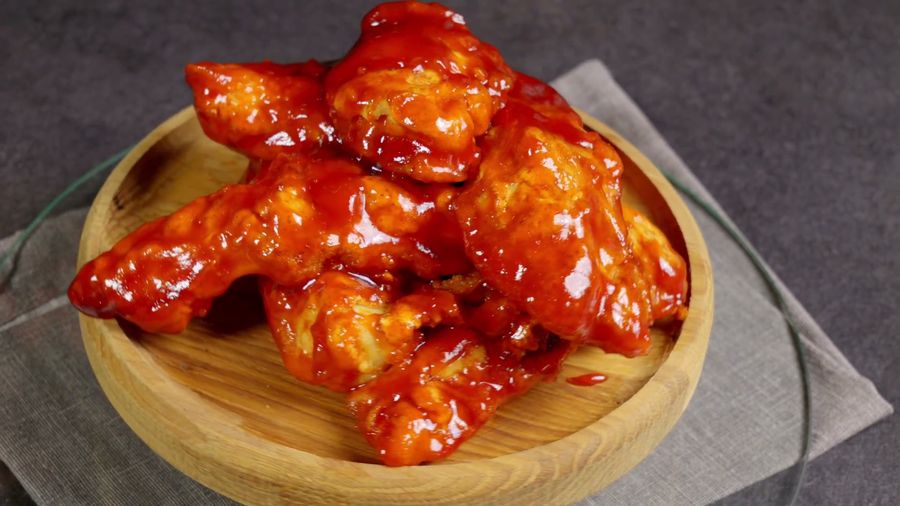
Honey BBQ chicken tenders build their shell with a double dredge — seasoned dry mix, a thin sparkling-water batter, back into the dry, once more into the wet — then air-fry on greased parchment at 200 °C / 400 °F for 15 minutes. Meanwhile the glaze comes together in a pan: ketchup, brown sugar and honey melted gently, sharpened with cider vinegar, Worcestershire and sriracha, and finished with three tablespoons of cold butter pressed in as it melts for a rich gloss. The hot tenders go straight into the sauce. Serves 3.
Instructions
- 1
Whisk the flour, cornstarch, paprika, garlic powder, dried onion, salt and baking powder — this is the dry coating mix.
- 2
Pour the sparkling water into a second bowl and whisk in a few spoonfuls of the dry mix until you have a thin, pancake-like batter.
- 3
Dredge each tender: dry mix, then batter, back into the dry, once more into the wet. The layered breading is the crunch.
- 4
Air-fry on a greased sheet of parchment at 200 °C / 400 °F for 15 minutes until golden (oven: 20–25 minutes, flipping once halfway).
15:00 - 5
Meanwhile, warm the ketchup, brown sugar and honey gently in a pan, stirring until they melt together.
- 6
Add the cider vinegar, Worcestershire and sriracha; keep stirring into a smooth, glossy glaze.
- 7
Add the cold butter all at once and press it gently as it melts — the slow blending gives the sauce its rich, glossy finish.
- 8
Toss the hot tenders straight into the sauce and coat them well.
Watch the video
Notes from our kitchen
The batter should run thin — closer to crêpe than pancake; a thick coat turns bready instead of crisp. The dredge deliberately ends on a wet layer: it fuses with the dry coats in the heat into that craggy golden finish. And add the butter to the glaze cold, off a hard boil, pressing it in as it melts — that slow emulsion is what makes the sauce glossy instead of greasy. The narration stands by it: this sauce could make cardboard taste great.
Variations
- Oven instead of air fryer. Same tray, same parchment: 20–25 minutes at 200 °C, flipping once halfway. The shell sets a little slower, so resist opening the door early.
- Milder or hotter. The two tablespoons of sriracha read as “just a little spicy” under all that sugar. Halve it for kids, or swap in your favorite hot sauce — the narration explicitly leaves that door open.
Frequently Asked Questions
Why sparkling water in the batter?
The fizz is the whole point — carbon dioxide bubbles lighten the batter so it fries into a crisp, airy shell instead of a dense one. Club soda works identically. Flat water makes a heavier coat; if that is all you have, keep the batter extra thin.
Why dredge twice?
Each dry-wet cycle glues another layer to the tender, and the layers fry into the craggy, extra-crunchy shell that a single pass cannot build. It also seals the meat so the tender inside steams juicy while the outside crisps.
Why does the butter go in cold and last?
Cold butter melted slowly into the warm glaze emulsifies instead of splitting — that is what turns a sweet ketchup base into a rich, glossy sauce that clings to the tenders. Butter added to a boiling sauce separates into an oily slick.
How do I store and reheat them?
Sauced tenders soften overnight, so if you are cooking ahead, keep the glaze separate: tenders airtight in the fridge up to 2 days, re-crisped in the air fryer at 180 °C for a few minutes, then tossed in reheated sauce. The glaze itself keeps a week refrigerated.
Related Recipes
Super Crispy Chicken Tenders
Air Fryer Buffalo Nuggets
Hot Honey Chicken Tenders
Spicy Ranch Wings
Grilled Stuffed Mushrooms